
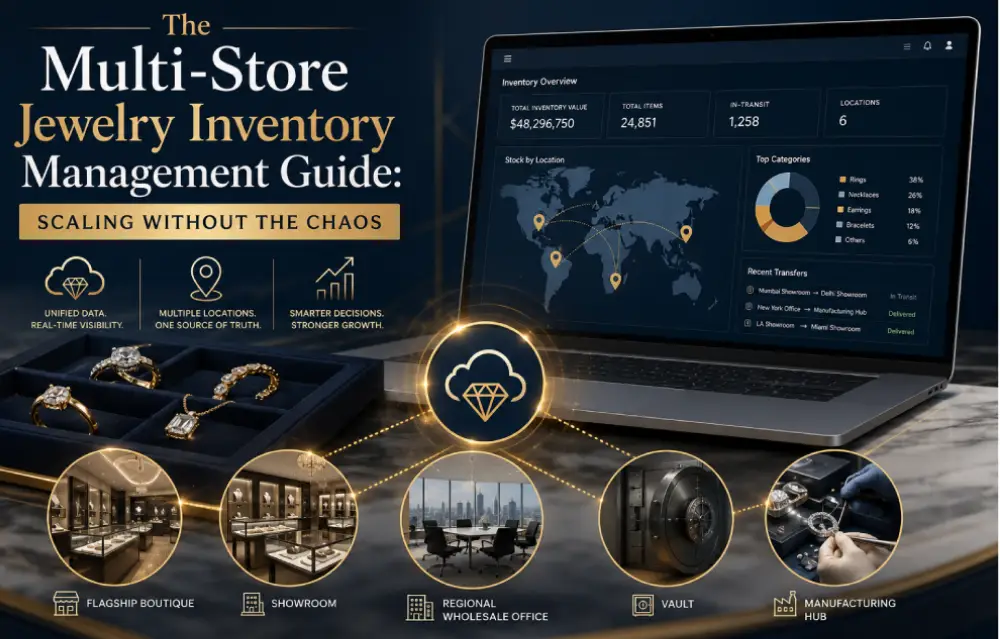
For a growing jewelry brand, expanding from a single flagship boutique into multiple showrooms, regional wholesale offices, or dedicated manufacturing hubs is a massive milestone. It represents brand authority, increased market reach, and higher revenue potential.
However, multi-store expansion introduces a distinct operational paradox: while your business footprint grows, your direct visibility over your most valuable assets shrinks.
Managing high-value inventory across separate vaults is entirely different from running a single location. In a single store, you can physically look inside a showcase or step into the vault to verify a stone. Once you introduce multiple locations, you are entirely dependent on data. If that data is delayed, fragmented, or trapped in localized systems, your expansion can quickly lead to costly stock discrepancies, trapped capital, and frustrated clients.
To scale successfully, multi-store jewelers must shift away from localized tracking and adopt a unified, central approach. Let’s look at the real-world operational challenges of multi-location jewelry management and the strategies required to keep your inventory perfectly aligned.
The Invisible Friction of Multi-Location Operations
When a jewelry business expands without centralizing its operations, serious friction points naturally emerge across the supply chain:
- The Shadow Stock Trap: Store A runs out of a popular 1-carat round brilliant engagement ring and places an emergency order with a manufacturer. Meanwhile, two identical rings are sitting forgotten in a safe at Store B. Capital is now needlessly trapped in duplicate inventory.
- The Inter-Branch Blind Spot: Shifting merchandise between locations for holiday events or trunk shows becomes a black hole of paperwork. Items go missing in transit or remain on the books at the originating store for weeks, distorting your actual stock counts.
- The Showroom Disconnect: A loyal client walks into your metropolitan boutique looking for a specific designer gemstone bracelet. The sales associate thinks the piece is at the suburban showroom but cannot verify its real-time availability. The client leaves empty-handed, and a high-ticket sale is lost.
- Consignment and Memo Confusion: Tracking loose stones or finished memo goods out with different brokers, partner retailers, or master setters becomes completely unmanageable when logged on separate, unlinked spreadsheets.
To protect your margins and sustain growth, your inventory must be able to communicate across physical borders in real time.
Orchestrating a Unified Cloud Ecosystem
The absolute foundation of multi-store success is a centralized database. Traditional retail point-of-sale systems treat each store like an isolated island that syncs data at the end of the day. A modern jewelry enterprise requires live, event-driven tracking.
Implementing a robust enterprise jewelry software platform ensures that every purchase, sale, inter-branch transfer, or repair update is reflected across your entire organization instantly.
1. Live, Cross-Showroom Visibility
When your showrooms, warehouses, and manufacturing workshops operate out of a single cloud-integrated dashboard, your team works from a single source of truth. Utilizing a specialized ERP for gold and diamond business means a sales rep at one location can look up a piece, view its exact physical location, check its availability status, and securely sell it or request a transfer while the customer is standing at the counter.
2. Deep Component Transparency
Jewelry inventory isn’t a collection of uniform boxes; it is a complex assembly of high-value components. A centralized system must preserve the unique digital DNA of every piece across all locations. Your central hub should instantly display:
- Gross weight versus net precious metal weight across varying alloys.
- Precise diamond and gemstone parameters (the 4Cs, dimensions, and certificate numbers).
- Specific manufacturing labor fees and master setter charges.
This deep granularity ensures that even if a piece is moved across the country, its true valuation, cost basis, and structural history remain perfectly intact for accurate financial reporting.
Streamlining Inter-Branch Logistics and Audits
Moving physical inventory between locations safely requires rigorous tracking protocols supported by reliable hardware and automation.
Scannable Custody and Barcode Logistics
Manually typing out stock codes during a multi-item branch transfer is an open invitation for administrative errors. The most effective way to eliminate this risk is by maintaining a strict barcode or RFID workflow.
When items are prepped for transfer, they are scanned out of the originating vault, creating an automated “in-transit” status. Upon arrival at the destination showroom, a quick scan verifies the shipment against the manifest, instantly updating the local livestock. This creates a secure, digital chain of custody that protects against internal shrinkage and transit losses.
Effortless Rolling Audits
Conducting a full physical inventory count across multiple large showrooms can completely halt business operations. By leveraging advanced jewelry platforms alongside scannable tags, auditing changes from a dreaded annual event into a smooth, routine habit.
Instead of shutting down showrooms, your branch managers can run quick, rolling cycle counts on individual showcases or specific high-value categories (like bridal or loose diamond parcels) in minutes. Discrepancies are flagged immediately, allowing corporate teams to address data mismatches or missing items long before they affect your end-of-year balance sheets.
The B2B Advantage: Wholesale and Global Trading
For businesses that balance retail showrooms with large-scale diamond wholesaling or international trading, the logistics become even more complex. High-volume loose stone turnarounds, mixed-lot sorting, and rapid market fluctuations require specialized digital tools.
A high-performing B2B department relies heavily on a comprehensive diamond wholesale ERP to track large parcels as they are broken down and distributed to different branches or custom manufacturing lines. Furthermore, integrating your central vault with an advanced diamond trading ERP ensures that your entire multi-store network stays completely aligned with global market data and supplier ecosystems.
Crucially, managing goods out on consignment requires bulletproof record-keeping. Utilizing dedicated diamond memo management software ensures that you know exactly which broker or retailer holds which parcel at any given second, tracking approvals, returns, and automatic billing instantly.
Centralized Command, Localized Success
Ultimately, the goal of multi-store inventory management is to empower your local sales teams while maintaining total corporate control.
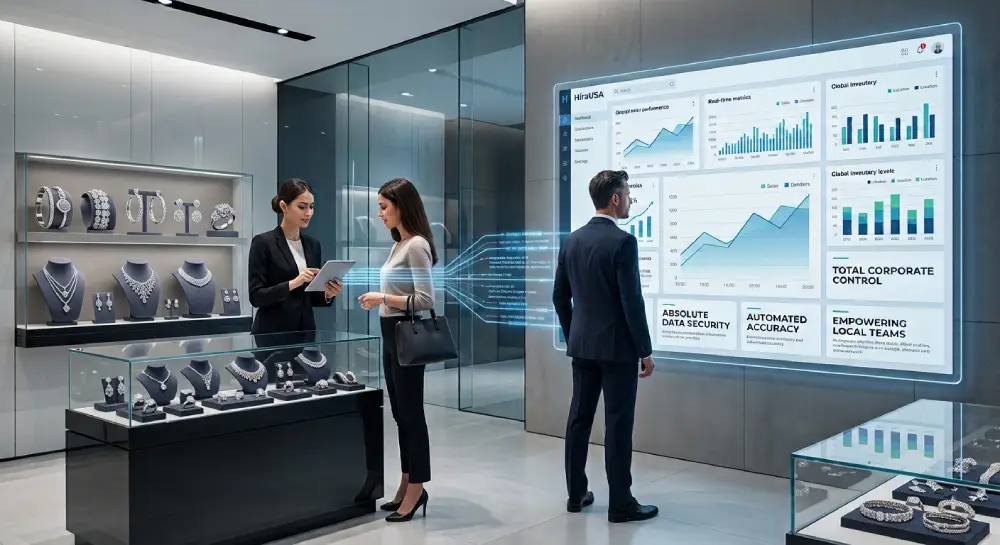
By pulling your physical stock levels, client profiles, and financial ledgers into a single, specialized network like HiraUSA, you remove the operational friction that stalls growing brands. You get the perfect balance: absolute data security and automated accuracy at the executive level, and rapid, frictionless luxury service on the showroom floor.
Ready to Scale Your Jewelry Brand Safely?
If you are ready to eliminate multi-store inventory blind spots, streamline your inter-branch transfers, and gain a crystal-clear view of your true cross-location profitability, it is time to upgrade your operational toolkit.
Contact us today to schedule a live, personalized demo and discover how the HiraUSA platform can seamlessly unify your inventory, eliminate errors, and provide the secure foundation your business needs to grow.


