
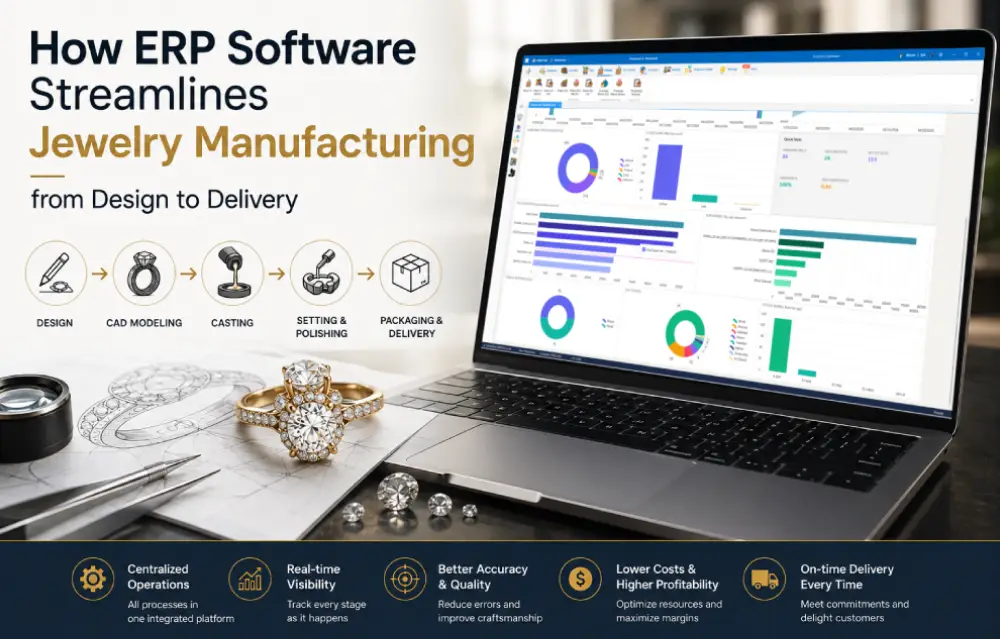
If you’ve ever managed a busy jewelry casting shop or custom design facility, you know that the journey from a CAD file to a polished showcase piece is anything but straightforward. Fine jewelry production is a high-stakes balance of artistic precision and strict material control. A single job order travels across a dozen specialized hands—from CAD modelers and 3D wax printer techs to casters, master setters, polishers, and quality control inspectors.
When you manage this intricate pipeline using physical job bags, dry-erase boards, or offline spreadsheets, subtle leaks happen at every bench. Metal weights get miscalculated, loose accent stones go missing without a clear record, and delivery dates slip.
To scale your shop without losing control of your profit margins, you need an operational brain built specifically for the trade. Implementing specialized jewelry ERP software replaces guesswork with a transparent digital thread across your entire floor.
The Bench Bottlenecks That Sabotage Workshop Margins
In traditional manufacturing facilities, tracking job progress usually relies on paper job envelopes traveling in physical plastic trays. As your order volume increases, several critical friction points naturally emerge across the shop floor:
- Unclear Precious Metal Losses: When 24K casting grain is melted down into custom 14K, 18K, or platinum alloys, metal naturally vanishes during melting, filing, and buffing. Without automated bench-by-bench logging, determining true polishing loss versus actual inventory leakage becomes impossible.
- Loose Stone Accountability Gaps: Handing a master setter a parcel of melee diamonds or a high-carat certified center stone without a live digital checkout log creates massive financial exposure.
- Communication Blind Spots: When a retail partner or client calls asking for a status update on a custom engagement ring, your office staff shouldn’t have to walk back to the workshop to hunt through job trays.
From CAD Rendering to Final Vault Audit
Modern jewelry manufacturing ERP software USA digitizes the job envelope, assigning a permanent digital footprint to every production run that tracks raw material consumption, artisan labor rates, and weight changes at every bench stage.
1. Casting and Alloy Allocation
When raw gold grain or alloy stock is issued from the central vault, the exact weight is logged digitally. Once the rough casting comes out of the investment mold and the sprue button is cut off, it is weighed again. The system automatically tracks metal shrinkage and initial casting loss before the piece ever touches a jeweler’s bench.
2. Setter Assignment and Stone Checkout
When the piece moves to stone setting, loose diamonds or colored gemstones are scanned out of the vault and assigned directly to that job ticket. The software logs precise carat weights, millimeter sizes, and setting instructions. Upon completion, scanning the piece confirms that all assigned components are fully accounted for down to the point.
3. Automated COGS Roll-Up
Once final polishing and quality control are complete, the software automatically aggregates every input cost: net precious metal weight, exact stone costs from inventory, and split labor fees for CAD designers, casters, setters, and polishers. This gives management an instant, accurate Cost of Goods Sold (COGS) roll-up.
Scaling Your Workshop with HiraUSA
Streamlining your shop floor from design to final delivery requires an operational platform engineered specifically for the trade. HiraUSA bridges the gap between your design desk, central vault, master setters, and general accounting ledger—giving your manufacturing facility the clarity, security, and structural accuracy it needs to protect its margins and scale safely.


