
It’s the second Saturday in December. Your store is packed. A customer walks up to the counter ready to spend $4,200 on a 1-carat round diamond halo pendant in 14k white gold. It’s your most reliable holiday design every single year.
Your sales associate slides open the display case. The velvet slot is empty. They run back to the safe, check the back stock, and come up empty-handed.
What happened? The casting mountings ran out on Tuesday. The bench jeweler couldn’t set the center stone anyway because the parcel of 1.5mm melee diamonds was depleted ten days ago, and nobody put in a replenishment order.
The shopper isn’t waiting three days for casting and setting. They walk two doors down to your competitor, and that margin is gone for good.
Meanwhile, sitting in your vault drawer are three trays of heavy yellow gold statement bangles that haven’t moved since last summer. Tens of thousands of dollars of your hard-earned cash sits frozen in unsold metal, while the piece your customer actually wanted wasn’t even in the building.
This is the classic squeeze in the jewelry trade: tied-up cash in dead stock on one side, and painful, preventable stockouts on the other.
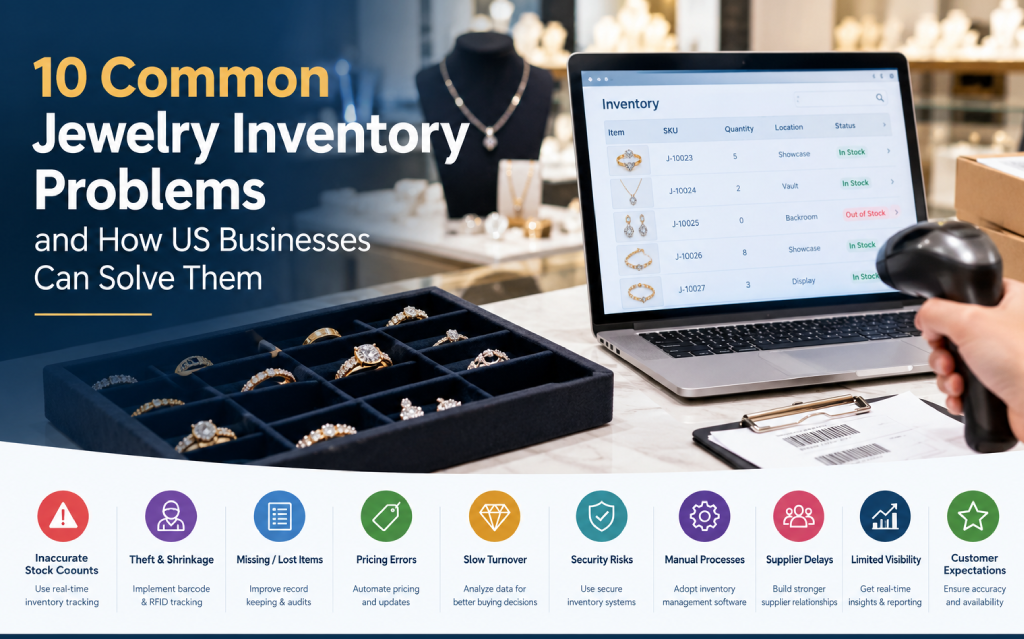
Fixing it starts with recognizing the practical jewelry inventory mistakes that quietly eat away at your bottom line.
Why Off-the-Shelf Tools Break Down in a Jewelry Business
Most retail shops sell simple, single-piece boxed items. If a boutique runs low on blue denim jackets, they check an inventory alert and order twelve more from the manufacturer.
Fine jewelry and diamond operations don’t work like that. You deal with layered parts, daily metal swings, and delicate components:
- Everything Is an Assembly: A finished diamond ring isn’t just one SKU. It is a live recipe: the center stone (cut, color, clarity, carat, certificate), a parcel of accent melee diamonds, the cast mounting, the head, and the bench labor. Run out of matching accent stones or a specific mounting size, and the whole piece stops cold.
- The Consignment Black Hole: Wholesalers and retailers constantly send goods out on memo. If a $9,000 diamond bracelet is sitting with a client on approval, is it available to sell? No. Is it off your books? No. When staff track memos on loose slips or disjointed sheets, pieces get double-promised, forgotten, or neglected until months have slipped by.
- Metal Vanishing at the Bench: Gold casting grain, sprues, bench filings, and polishing sweeps are literal cash. When you don’t reconcile the metal you issue against what comes back in finished pieces and scrap, bench shrinkage quietly erodes your margin on every single custom job.
4 Costly Mistakes That Drain Your Safe of Cash
Running tight jewelry inventory management means spotting where daily habits fall short:
1. Treating Every Piece with the Same Priority
Jewelers often buy on instinct rather than turn rates. Keeping staple bridal mountings and popular diamond studs in stock is critical, but letting slow-moving fashion pieces sit in display cases for 400 days without a price adjustment or a trip to the refinery ties up funds that should buy your fastest movers.
2. Hand-Typing Carat and Gram Weights
Typing decimal points by hand all day leads to inevitable slip-ups. Turning a 0.79 ct stone into a 0.97 ct stone on an invoice or entering a metal weight wrong creates massive stock errors, mispriced jobs, and insurance headaches.
3. Putting Off Stock Takes Because They’re Painful
If counting your vault means locking the doors for an entire weekend with clipboards and paper lists, your staff will put it off. That delay means missing items and scrap discrepancies go unnoticed until tax season, when it’s far too late to figure out where they went.
4. Running a Fine Jewelry Business on a Clothing POS
Generic point-of-sale systems can’t handle stone grading, fluctuating metal prices, or job envelopes. Forcing your team to patch the holes with side spreadsheets guarantees miscommunication between the front counter, the vault, and the jeweler’s bench.
How Specialized Software Puts You Back in Control
Fixing stockouts and securing your margins requires dedicated jewelry inventory software built around how stones and metals actually move. HiraUSA is an all-in-one jewelry ERP and jewelry retail software platform built for diamond dealers, wholesalers, retailers, and custom shops.
Here is how HiraUSA stops stock headaches before they start:
- Loose Stone and Parcel Control: Track certified diamonds by their 4Cs and certificate numbers, and manage melee parcels by total carats and stone count. Issue stones straight into custom jobs without losing your remaining lot balance.
- Direct Scale and Scanner Hookups: Connect your digital bench scale directly to the system. Weights pull straight onto your screen—no hand-typing required. Print thermal string tags, rat-tail labels, and parcel packets with ease.
- Rapid Barcode Stock Audits: Walk your cases with a barcode scanner and audit trays in minutes instead of days, keeping shrinkage in check without closing the doors.
- Clean Memo-In and Memo-Out: Issue formal memo paperwork from live inventory. You can see what is in your safe, what is on approval, and who has it. Convert approved pieces to final invoices with a single click.
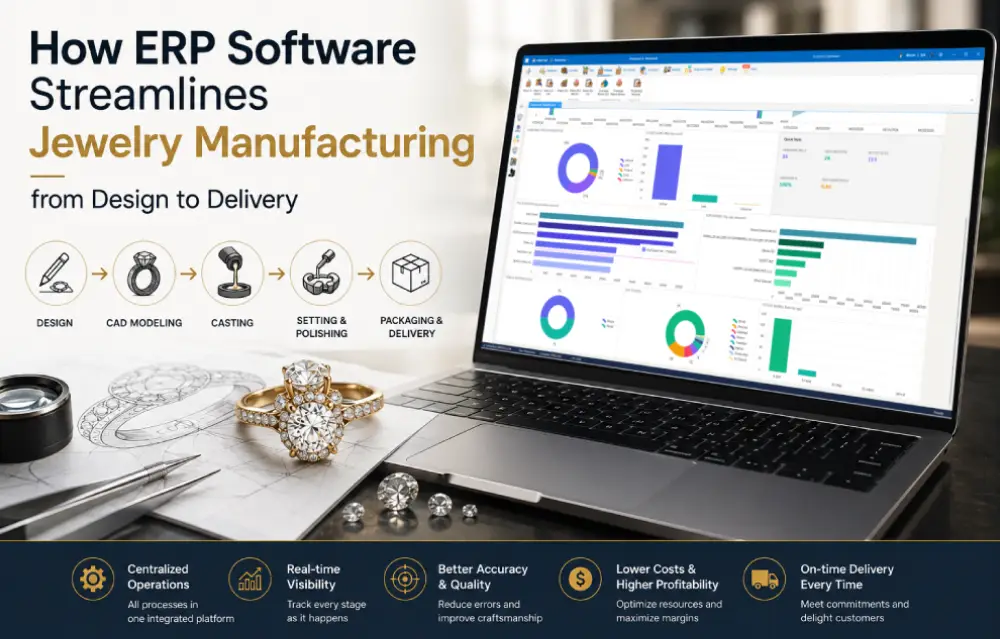
- Job Envelope Tracking: Route custom work through CAD, casting, setting, and polishing. Log metal issued against finished weights and recovery sweeps so metal loss stays right where it belongs.
- Clear Stock Insights: Run built-in reports to see what’s turning, what’s stalling, and where your capital is tied up, so you can buy smarter ahead of peak seasons.
HiraUSA continuously upgrades its platform. Some features may be under development or available in stages. Please confirm current feature availability with HiraUSA.Take Back Control of Your Safe and Your Margins
Stockouts cost you real sales, and inventory discrepancies quietly eat away your profits. You shouldn’t have to spend your evenings hunting down missing memo slips, digging through drawers for lost mountings, or wondering why your metal weights don’t balance out at the end of the month.
With tools built specifically for the jewelry trade, you keep your bestsellers in the case, protect your margins, and run your business with total confidence.
Ready to stop guessing and get complete control over your stock?
Visit HiraUSA or check out HiraUSA Pricing & Plans to see how simple inventory control can be.
Frequently Asked Questions
What are the most common inventory mistakes jewelers make?
The biggest ones are letting stockouts happen on core assembly parts (mountings, melee stones, findings), typing weights by hand instead of pulling them from scales, letting slow inventory sit for over a year, and tracking memo goods on paper notes.
How does specialized jewelry retail software prevent stockouts?
It tracks your raw materials and sub-components right alongside finished pieces. You get visibility into whether you have the loose stones, mountings, and findings ready to build or restock your top sellers before you run out.
Can HiraUSA handle both retail pieces and bench jobs?
Yes. It manages finished showcase items, loose certified diamonds, melee parcels, and custom manufacturing jobs tracked through digital job envelopes.
How does connecting a bench scale stop stock errors?
Connecting your scale directly to the software pulls exact weights straight into your records. It cuts out manual typing, eliminates transposed decimal points, and keeps your physical metal and stone counts completely aligned with your records.
How does memo tracking work in HiraUSA?
Items on memo remain recorded on your balance sheet, but the system immediately marks them unavailable for showcase sale. It tracks customer details, insurance values, and return dates, and lets you invoice approved pieces in one click.
Do I have to shut down the showroom to do an inventory audit?
No. Because the software supports barcode, tray, and envelope scanning, you can audit your vault section by section or case by case during regular working hours without getting in the way of sales.
Final E-E-A-T Check
- Industry experience demonstrated: YES (Holiday stockouts, assembly delays from missing melee, memo tracking issues, and bench scrap recovery)
- Industry expertise demonstrated: YES (4Cs attributes, mounting logistics, scale tare/net capture, job envelopes, and precious metal sweeps)
- Facts supported/verified: YES (Grounded in everyday jewelry trade operations and published HiraUSA capabilities)
- No invented statistics/testimonials: YES (No fake percentages, made-up quotes, or fictional case studies)
- No unsupported HiraUSA features: YES (Reflects verified public platform features: scale sync, tag printing, memo workflows, job tracking, and reporting)
- Competitor comparison is balanced: YES (Balanced comparison focused on generic POS limitations)
- Writing is trustworthy and transparent: YES (Includes transparent platform note and realistic trade guidance)